Blog
TDK Reaches for More Realistic AR with Haptics

Augmented-reality (AR) devices are becoming more accessible. Everything from Lenovo’s ThinkReality VRX headset to XReal’s One Series and Meta’s Ray-Ban Display smart glasses are able to overlay digital content onto the physical world without fully blocking it from view. But most of these platforms remain largely visual. Creating the sense of interacting with virtual objects requires more than high-resolution displays and accurate eye- and hand-tracking.
Haptics is becoming a key technology to bring more natural interactions in augmented-, mixed- and other extended-reality (XR) devices, said Guido Gioioso, CEO of Weart, which showed a prototype haptic glove at CES 2026. The device, called TouchDiver, can reproduce a complete range of tactile sensations, combining pressure, texture, and temperature feedback to make digital objects feel tangible rather than just visible (see the demo in the video above).
Co-developed with TDK, the device is equipped with high-accuracy sensors that track hand and finger movements in real-time, and fast-response actuators that can keep up with the visual system. These actuators, based on TDK’s PowerHap technology, create subtle vibrations that mimic the feel of tactile sensations — from smooth surfaces to coarse textures — while maintaining low latency, enabling more seamless interactions with digital objects.
“We develop haptic gloves that are able to both track movements of the user’s hand during an interaction within virtual-, extended-, or mixed-reality environments,” said Gioioso. “But, most importantly, we can provide haptic feedback during the interaction. So, when you grasp a digital object or when you touch a surface in the virtual environment, you can feel the object or the surface in terms of the forces, textures, and temperature.”
Fast-Response, Wide-Bandwidth Piezo Actuators
TouchDriver uses compact servo motors to apply pressure to the user’s fingertips, primarily to reproduce the resistance of hard or soft materials or replicate the sensation of the edges and undulations of different shapes. The system can render forces up to 5 N with a resolution of 0.02 N. This allows users to feel variations in the stiffness of virtual objects and perceive the three-dimensional shapes on the surface of objects, like the ridges on a screw.
According to Gioioso, the prototype device also recreates hot and cold sensations on the skin. This is important so that individuals can tell the difference between materials; for instance, metal objects that feel cooler to the touch due to their higher thermal conductivity.
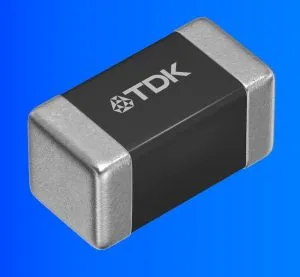
But one of the core building blocks of the device is TDK’s PowerHap technology. PowerHap is a compact “piezo” ceramic actuator that creates precise, local vibrations leading to more realistic sensations than the servo motors. They range from subtle vibrations required to mimic the feel of pressing a physical button or even more subtle textures of different materials such as plastic or metal. Featuring faster response times and a wider frequency range than other technologies, TDK said it can deliver crisp, sharp haptic feedback.
PowerHap and other piezo actuators convert electrical signals into subtle physical displacements. Just as the human ear perceives certain frequency sounds to be louder than others, a person’s fingertips perceive vibrations differently depending on their intensity. By fine-tuning the frequency and amplitude of the vibration produced by the PowerHap actuator, TDK acknowledged that it’s possible to create different haptic sensations.
PowerHap technology is based on multilayer piezo plates with copper inner electrodes that can be driven at voltages in the 0- to 120-V range. The components use steel bows on both sides to amplify the contraction caused by the piezoelectric effect, increasing its tactile impact (see figure). PowerHap is driven by haptic driver ICs, which are specifically designed to apply vibration patterns to the actuator so that it can create accurate tactile sensations such as clicks, vibrations, and textures.