Blog
EW BrightSparks 2025 profile: Samuel Kennedy, University of Southampton

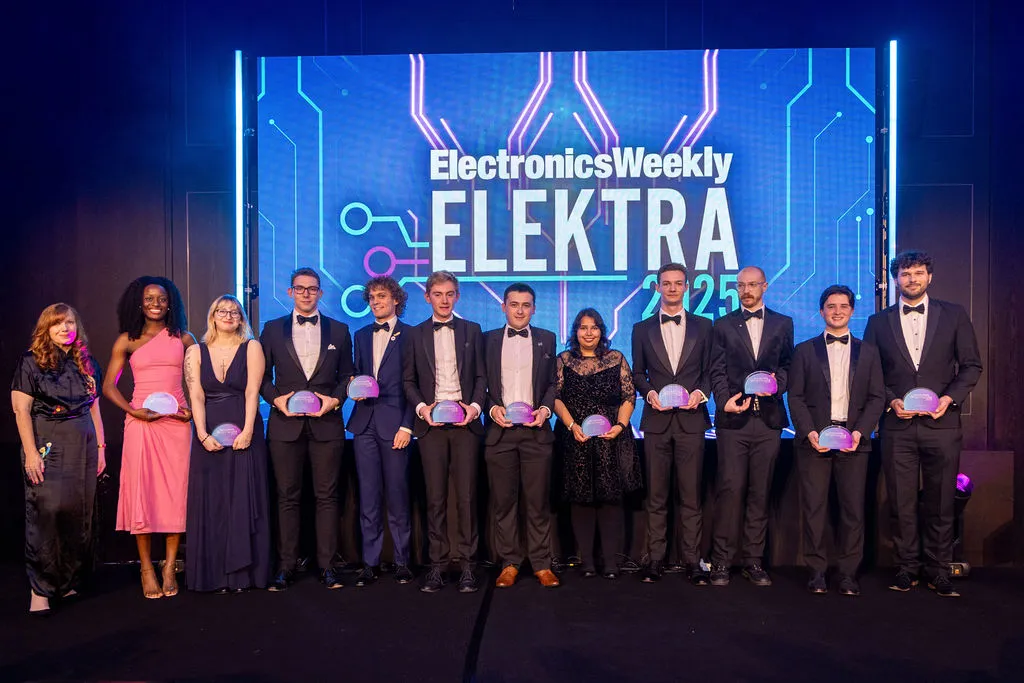
In the next in our series on the latest EW BrightSparks of 2025, we profile Samuel Kennedy, an Electronic Engineering student at the University of Southampton. He is also a UK Electronics Skills Foundation (UKESF) scholar.
Achievements
As a 21-year-old electronics engineering student, Samuel had the opportunity to publish a workshop paper for the IEEE CSR Hardware Cybersecurity Systems (HACS) conference. He has also lead the electronics division of University of Southampton’s human powered aircraft society, and been awarded a UKESF Scholarship by ARM.
Through these different activities he has been able to make a research contribution to the electronics industry, support and mentor younger students interested in practical electronics, and demonstrate academic attainment, we learned.
Firstly, Samuel told us he believes his main achievements are his contributions as Head of Electronics in the University of Southampton’s Human Powered Aircraft Society (SUHPA).
He has contributed technically, through working in a team towards designing and building an avionics system for the aircraft. For example, PCB design and programming to develop a low latency, low weight fly-by-wire system. This was implemented using radio communication from the pilot’s flight computer to the tail computer, actuating the control surfaces.
He told us it also included development of a data collection system, making use of GPS, a time-of-flight sensor, a pressure sensor, and various other components. It is used mainly to log data and help to inform the design of the aircraft.
“My role in Human Powered Aircraft electronics has helped me to develop effective leadership. The electronics division receives a constant influx of new, inexperienced members, and the society is committed to allowing aspiring electronics engineers to join and develop practical electronics skills by working as part of a team on a circuit board design project. I have devoted myself to helping to organise the department’s work, providing suitable support to less experienced members as required. This has resulted in my being elected as the society’s first Vice President with an electronics background for next year.”
Secondly, through his degree – as part of an individual project – he has been working on modifying computer architecture to accelerate the execution of a particular Post-Quantum Cryptography system—McEliece. This was a significant achievement.
“My work was considered by my supervisor to demonstrate sufficient novelty that he recommended I publish the work. My paper has been accepted as a workshop conference paper for IEEE CSR HACS this year in August. This work represents the beginnings of advancement in a critical area of research in electronics and computer engineering. It is necessary that computing digital hardware is developed to be in a position to support advances in cryptographic algorithms. This is important for ensuring security in a world with quantum computers.”
Samuel shared that he is very keen to continue developing in this area and continue this work in my career.
Finally, he is also proud of his UKESF scholarship, and has been able to demonstrate solid academic results. For example, achieving a very strong first in all completed years of his degree.
As a result of this, he fely very honoured to be awarded a UKESF scholarship by ARM. This means he has had the opportunity to complete an internship with ARM over the summer. The placement is with the company’s Architecture and Technology division.
Community
Samuel has also been busy in term of STEM work or community contributions, we learned.
As a third year university student, he told us how he tried to make use of opportunities to engage with electronics projects outside of his degree.
For example, he contributed on the electronics side of the Human Powered Aircraft society at the University of Southampton. He has also volunteered to promote electronics to young people at his University’s Science and Engineering Family days.
And not forgetting he has made the most of his position as a UKESF Scholar to apply for volunteering roles. These include volunteering at a conference, and volunteering for a school STEM fair.
Firstly, expanding on his role at SUHPA, he was the Head of Electronics, as previously mentioned. This meant taking on the role of leading the team responsible for designing all the electronic systems on board an aircraft. He told us:
“Though this role requires a lot of technical work in circuit design, PCB layout, and programming, a major part of the role is supporting the intake of new members into the team. This is an essential part of a university engineering society, as there is a high turnover of members, so it is essential each year to ensure that there is a new set of members ready and competent to take over leadership positions.”
He told us students studying electronics in early years often claim that there is a lack of opportunities to develop practical electronics skills as part of their degrees. This is one of the features that make the society intersting, he shared – that it helps to develop this missing aspect by providing practical electronics project to work on in a team.
To this end, Samuel committed to providing useful and interesting tasks for newer members to engage with, providing oversight and guidance as required. This helped to develop the practical electronics skills of members in the team.
Also, through the Society, he has pursued opportunities to promote electronics to younger people. For example, representing the society at open days. He grasped the chance to help encourage and inspire students potentially interested in studying electronics.
Secondly, Samuel has also been involved with the University of Southampton itself. For example, he has promoted electronics to school age students through volunteering opportunities.
He volunteered at a Science and Engineering Family day, working with primary school age students on soldering tasks, helping them to understand and develop an interest in electronics. And he volunteered with a school visit to the university, School of Electronics and Computer Science, helping to organise activities and guide students around the site.
Finally, as mentioned, he is pursuing volunteering activities through his UKESF Scholarship, as well. This includes volunteering at a STEM fair for secondary school age students, and volunteering to help at the IoTSF conference.
“My volunteering activities are motivated by a commitment to the electronics industry, and I fully intend to continue volunteering through opportunities with UKESF and ARM.”
Congratulations to Samuel Kennedy!
Congratulations to Samuel Kennedy!
See also: Elektra Awards 2025 – The Winners