Blog
Bottle your judgment and make it outlive you

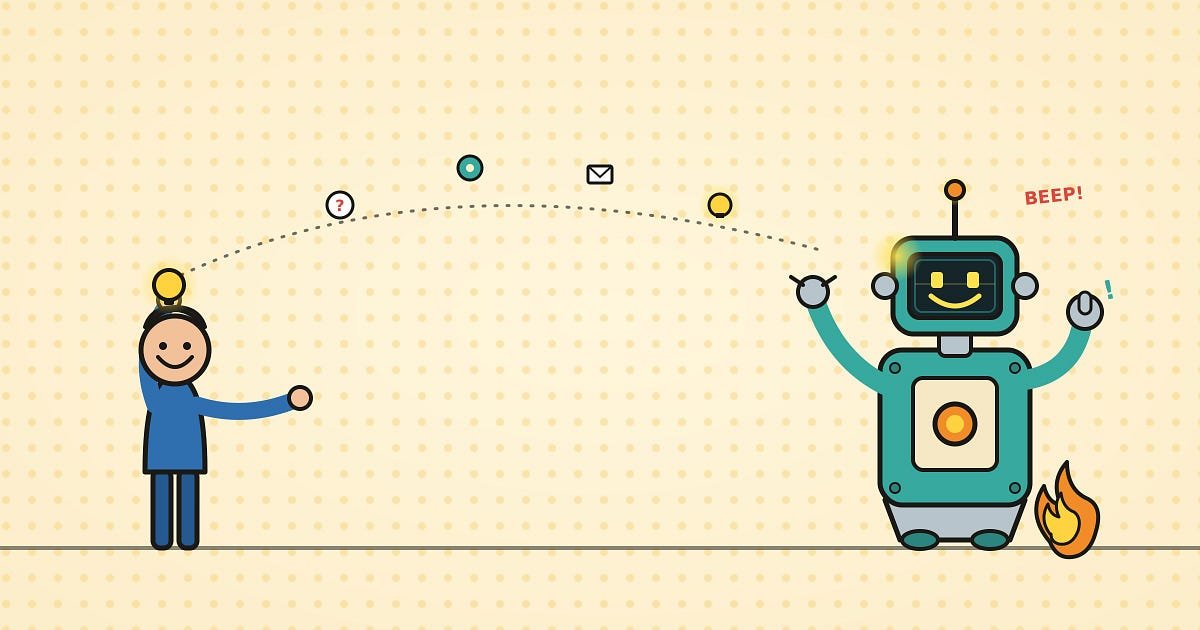
One of them is quietly trying to get out of his own head. For months he’s been feeding AI the way he works, his decisions, his reasoning, the emails he’s sent, the decisions he’s made, until it started coming back sounding like him and, more unsettling, deciding like him. To be clear, he’s not trying to clone himself. He just wants his judgment to be portable, out of the one skull it’s been stuck in and into something the rest of the company can use.
Ikujiro Nonaka coined this move decades ago as “externalization,” turning what you can’t say into something explicit. It used to be nearly impossible. Now Nate Jones writes step-by-step guides for doing it to yourself, and Jenny Ouyang summed it up saying, “Trying a tool was easy. Teaching it how I work was the expensive part.”
The other co-founder is uneasy about the whole project. When someone on my team put up a slide about turning his judgment and taste into a repeatable system, he half-laughed and said, we’re going down a dangerous path here.
He agreed the principle was right, that you should try to distill how a founder sees patterns and connects dots. What he refused was flattening it. He didn’t want a version of himself people could parrot. Ask him how his judgment actually spreads and he doesn’t point at a document, because there isn’t one. He points at people.
New hires get paired with someone who’s been there long enough to have soaked the place up. Nobody’s really onboarded, he says, until they’ve stood in the room at one of the company’s events and felt firsthand what the thing is. His judgment travels by proximity. You catch it or you don’t.
If you’ve seen The Karate Kid, you already know he’s not wrong. Daniel doesn’t learn karate from a manual. He learns it by waxing a car, painting a fence, doing the reps a thousand times until the judgment lives in his hands and he couldn’t explain it if you asked.
Jean Lave and Etienne Wenger called this “situated learning,” expertise that moves by sitting close to the work, not by reading about it. When you ask this founder to explain one of his own best decisions, you get the shrug everyone gives. He just pictures how it ends and works backward.
Gary Klein spent a career studying that shrug. It’s pattern recognition built from thousands of reps, and it does not come apart into steps.
Which means the two of them are basically running a version of Moneyball, in real life, from opposite dugouts. One’s the old scout who swears he can see it in a kid and can’t fully say how. The other’s building the model that writes down what the scouts could never articulate.
The movie is more honest about how this works than most AI takes are. While the model won that argument, it never made the scouts worthless. It made the good ones more valuable and the vague ones expendable.
This is the same split that’s coming for judgment. When Leonard and Swap named “deep smarts,” they surfaced the whole deal:
You can’t transfer the good stuff through documents alone, and you can’t scale it through apprenticeship alone. You need both. Almost nobody does both.
Nonaka saw this coming forty years ago. His model of how knowledge actually moves through a company wasn’t a menu to pick from, it was a spiral, where writing things down and learning by proximity feed each other in a loop. Do only one and the loop breaks, but writing-it-down and learning-by-osmosis feel like opposite instincts, so people plant a flag on the half that suits them, the systematizer documents everything, the mentor swears by proximity, and each quietly thinks the other is doing it wrong.