Blog
The DADO System by AKO Takes Responsibility Seriously

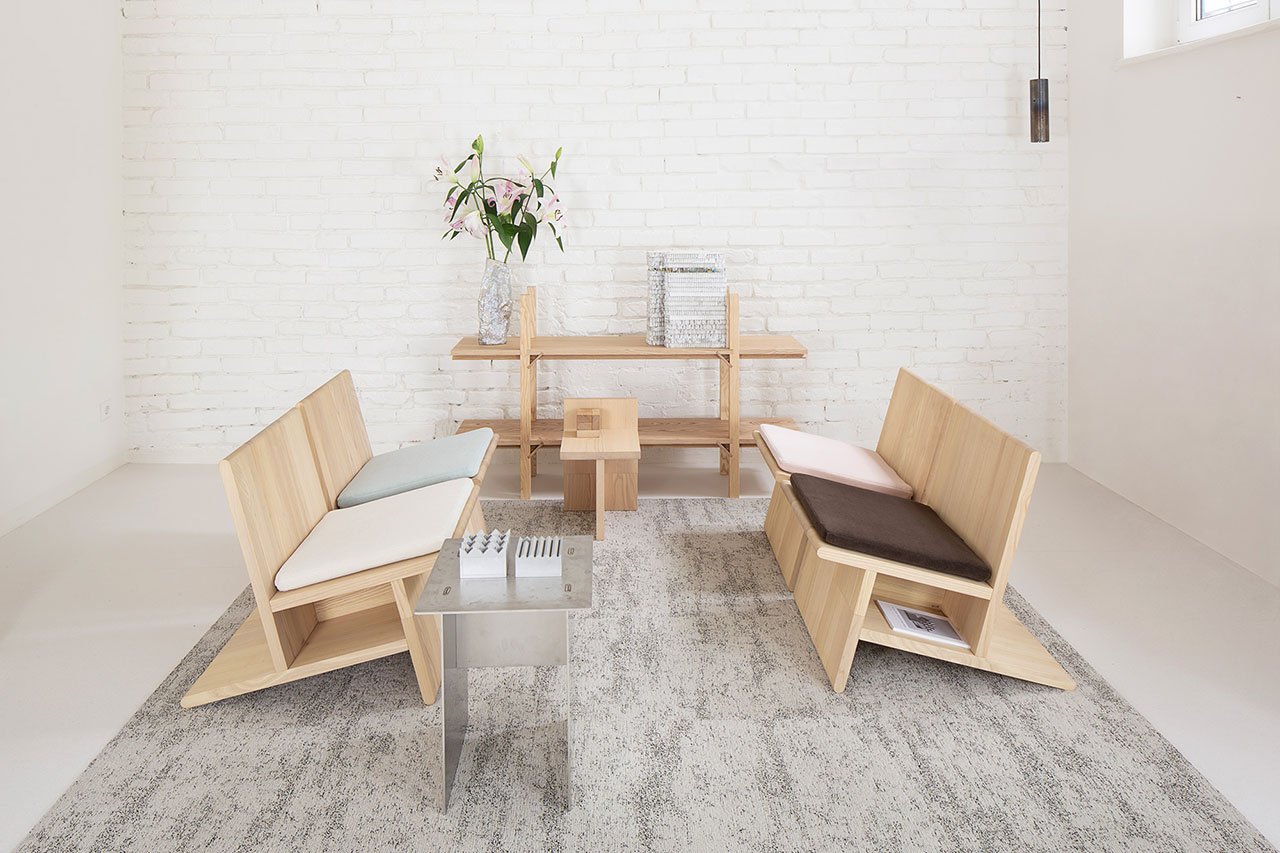
You’re one step away from finishing your new flat-packed furniture, only to realize that one final screw is missing. A devastating, yet very real, situation. While flat-packed furniture provides many benefits over traditional crating, there are still some pain points to resolve, and missing hardware is definitely one of them. Enter the DADO System by AKO, or Allen Kaufmann Objects. No hardware, no glue, no fastening — the system is meant to slot together with friction, precision, and finesse alone.
Shown in its best light at Berlin Design Week 2026, AKO’s first complete collection cleverly combines the strength and lightness of solid wood with the detail-oriented construction logic designers expect. Developed within ALLEN KAUFMANN ARCHITEKTEN since 2014, AKO brings architectural thinking down to the scale of furniture and objects: things one can own, assemble by hand, take apart, repair, move, and keep.

No hardware means no screw holes to cover up, no seams to conceal, no awkward underside telling a different story from the polished surface above. Everything is just where it should be—no more, no less. The pieces can technically be used in any direction: nothing to hide.


As simple as it is elegant, strong shapes emerge — a graphic grid, the architect’s plane. Thinner boards intersect with the larger frame to strengthen the structure, running diagonally along the shelves and propping up the horizontal planes as they bisect the legs. A load-bearing element that also serves as subtle decoration, this structural rhythm creates visual interest along the underside of the shelves while keeping the tops perfectly unencumbered, ready to store, display, and serve.


The DADO series is joined by AKO’s Dovetail pieces, which use interlocking dovetail geometry to transform a traditional joint into a structural, spatial, and visual principle. A stool joins the collection as well, with five expertly crafted pieces coming together to form a compact geometric seat. The assembly feels intuitive, with each cut quietly delineating where the next piece might go. As designers, it is our duty and privilege to make the things we create as comprehensible as possible.


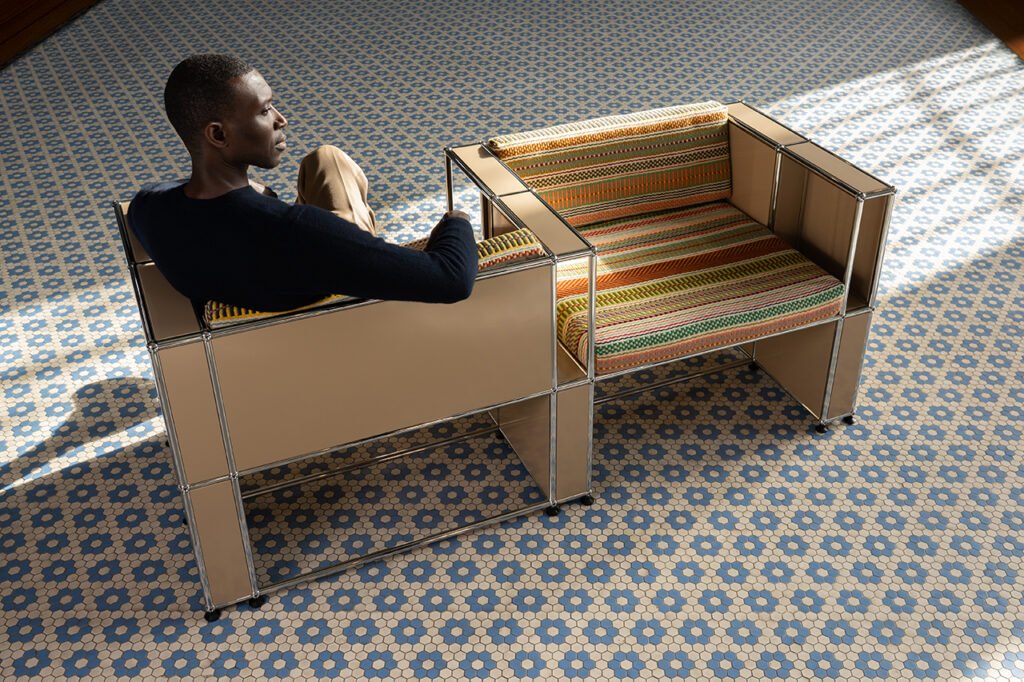
Entering the sunny space, one is immediately met with a row of chairs, adorned with pastel cushions in varying colors. The body of each chair creates a square, its sides extending to form the back, the seat, and the points of contact with the floor. Balanced, unobtrusive, yet elevated, the philosophy of AKO is just as much about what is not there as what is. No brackets. No clips. No one-off tool you will keep for six years and never find when you need it. No small landfill of unnecessary parts arriving inside the box.

Demonstrating a commitment to the honest use of material, AKO takes this beyond product design and into a more philosophical approach. The work asks whether furniture can be materially clearer, structurally more honest, easier to understand, and more worthy of keeping. Wood, after all, is renewable and low-toxicity, but it is also difficult. It moves. It has grain, tension, and quirks — almost like a fingerprint. Rather than flattening out those qualities, AKO works with them through precision joinery, repeatable geometry, and construction that remains visible.

Justin Allen, co-founder of ALLEN KAUFMANN OBJECTS, shares the “why” behind DADO: “One material. Traditional joinery with invention. Flat packed. Made to last, and made to move with you. Flexible, like our lives. Flexible like wood.”

To learn more about the DADO system by Allen Kaufmann Objects, visit allenkaufmann.de or akobjects.com.
Photography courtesy of Allen Kaufmann Objects.