Blog
Cooler Master Debuts New Budget and Quiet Workstation PC Cases and Airflow Ducts

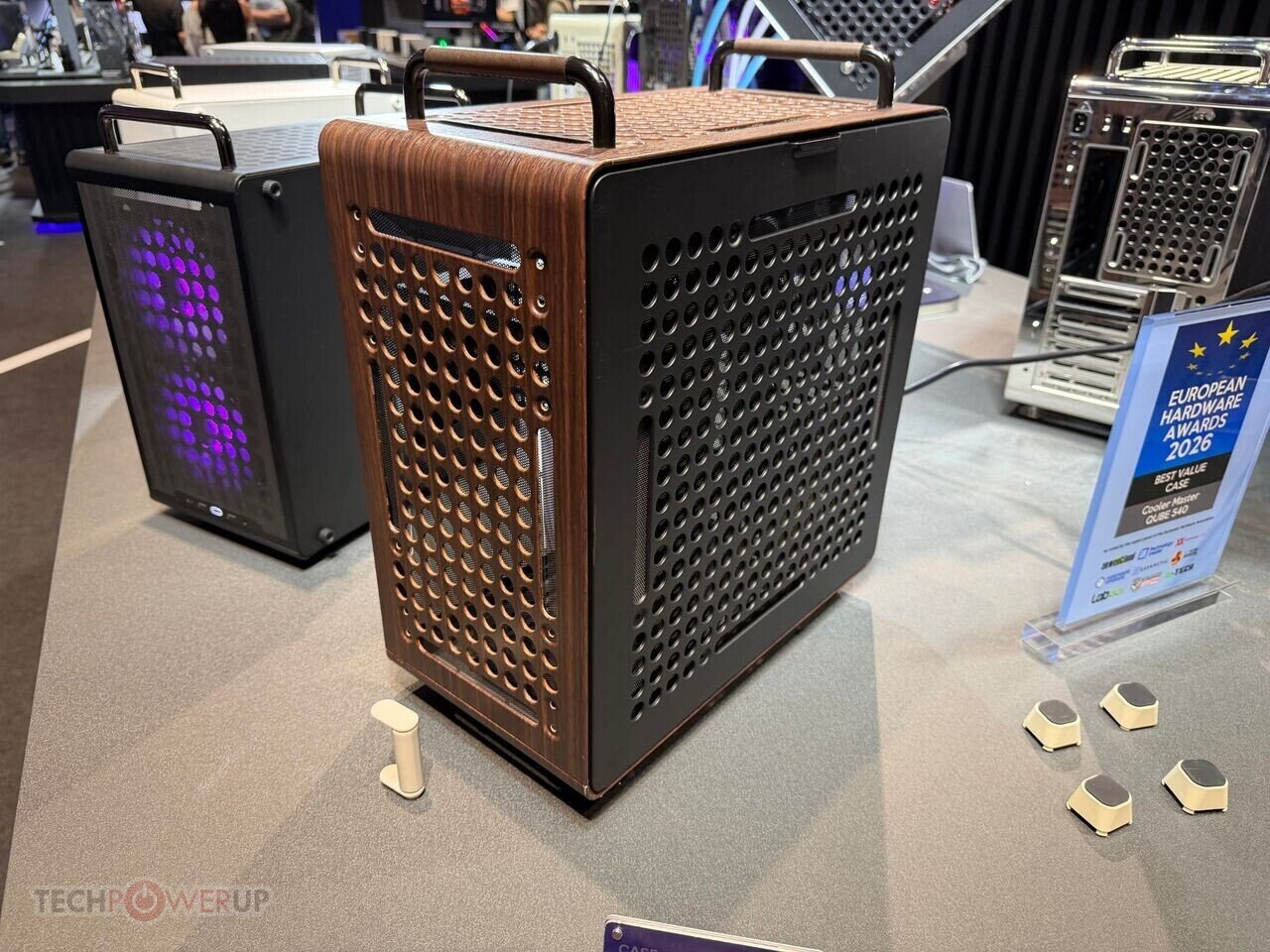
Cooler Master has also updated both its high-end gaming and workstation-grade cases, which have an emphasis on a clean aesthetic, low noise emissions, and hardware compatibility. The new Silencio 600 case is an updated version of the noise-optimized case that also prioritizes airflow, thanks to what Cooler Master describes as a noise trapping maze and a special fabric composite material that helps damp fan noise in the front panel. Behind that front panel, the Silencio case can fit up to two 180 mm fans. If high airflow is more your speed, Cooler Master is also showing off the HAF II 500, which is the latest iteration of the legendary HAF case, this time launching alongside a massive 40 mm thick 220 mm thick Mighty40 F220 fan—two of which will be able to be installed in the front intake of the new HAF II 500. The new HAF case will also be able to fit a single 180 × 40 mm exhaust fan in the rear exhaust position. The HAF II 500 is also expected to launch around the end of July 2026.
There were also some material innovations at Cooler Master’s booth, with the brand showing off what it describes as an airflow-penetrating industrial grade 3D mesh. Effectively, this is a porous metal mesh that allows air to pass through it but traps sound waves in another attempt to optimize both cooling and noise performance. The material was shown off on two limited edition cases, the top of a CPU tower air cooler, and as a pump cover for some of its MasterLiquid AIO water coolers. Cooler Master plans to launch the 3D printed mesh-equipped Cosmos Alpha Gold E-ATX case and the compact MasterFrame 400 Mesh Gold in limited quantities—1000 units for the MasterFrame 400 and 200 units for the Cosmos Alpha Gold—although an exact launch date isn’t clear yet.Project Air Duct is another Cooler Master project that was shown off at Computex, and it effectively aims to redirect case airflow with louvered ducts to optimize cooling setups where a fan may not be pointing directly at a hot component. Cooler Master claims that directing airflow and increasing its velocity with the ducts can help increase air pressure by as much as 15%.