Blog
Empathy is the Future of AI-Responsive Experiences

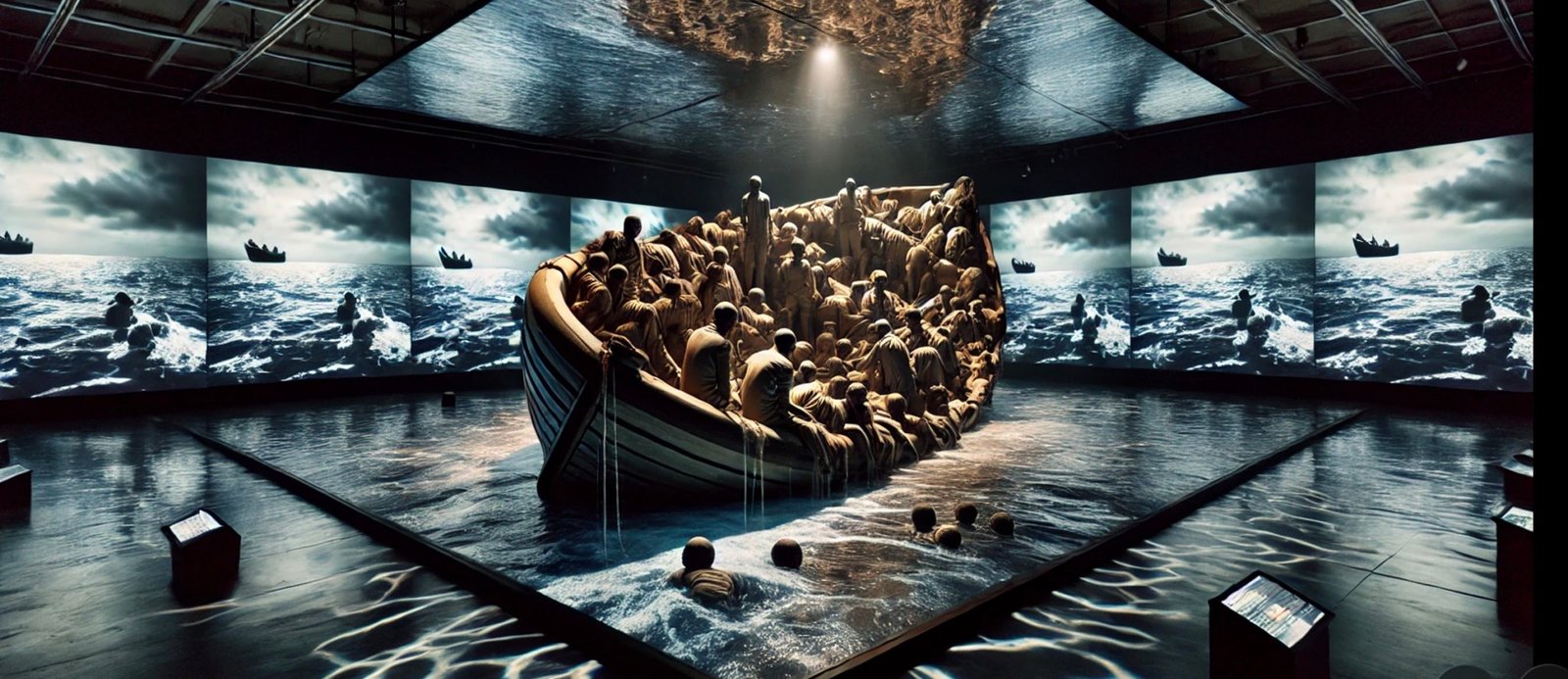
As AI, spatial computing and immersive technologies rapidly move from experimental novelty into the fabric of everyday life, a new question is emerging for designers, architects, technologists and cultural institutions alike: What does it actually mean to design for humans in an increasingly immersive world?
As part of the Design Dialogues by Design Milk at Clerkenwell Design Week 2026, the conversation “Immersive Spaces: Technology, Empathy & the Human Experience” explores a shift already underway: from designing spaces people simply look at toward designing spaces people emotionally inhabit.
From AI-responsive retail environments and adaptive workplaces to immersive cultural experiences and multisensory public installations, the next generation of spatial design is no longer only concerned with aesthetics or efficiency. It is increasingly concerned with behaviour, feeling, participation and responsibility.
As immersive technologies become increasingly embedded within public spaces, workplaces and cultural environments, the conversation is shifting from novelty toward responsibility. The question is no longer simply how immersive a space can become, but how intelligently, ethically and humanly it responds to the people moving through it.
Image courtesy Adipat Virdi
Designers are now exploring how AI, spatial computing and multisensory storytelling can create environments that are more adaptive, empathetic and emotionally aware and become spaces capable of responding to human behaviour, attention, mood and need in real time. From workplaces that foster wellbeing and collaboration to cultural spaces that deepen participation and reflection, immersive design is beginning to redefine how people relate not only to technology, but to one another.
At the same time, this evolution challenges creators to think more carefully about the systems they are building:
• How do we create experiences that feel genuinely inclusive and accessible?
• How can immersive environments encourage reflection, connection and presence rather than distraction and overload?
• What does it mean to design spaces that do not simply capture attention, but actively support human experience in more meaningful and responsible ways?
Rather than treating immersion as spectacle alone, the conversation explores how emerging technologies can create responsive, participatory and emotionally resonant spaces designed not just to impress audiences but to understand and support them.
The discussion will explore how emerging technologies are reshaping the relationship between people, story and space and why empathy may become one of the most important design principles of the next decade. Central to the conversation then is the idea that immersive design should not be treated as spectacle alone but as a form of behavioural and emotional architecture.
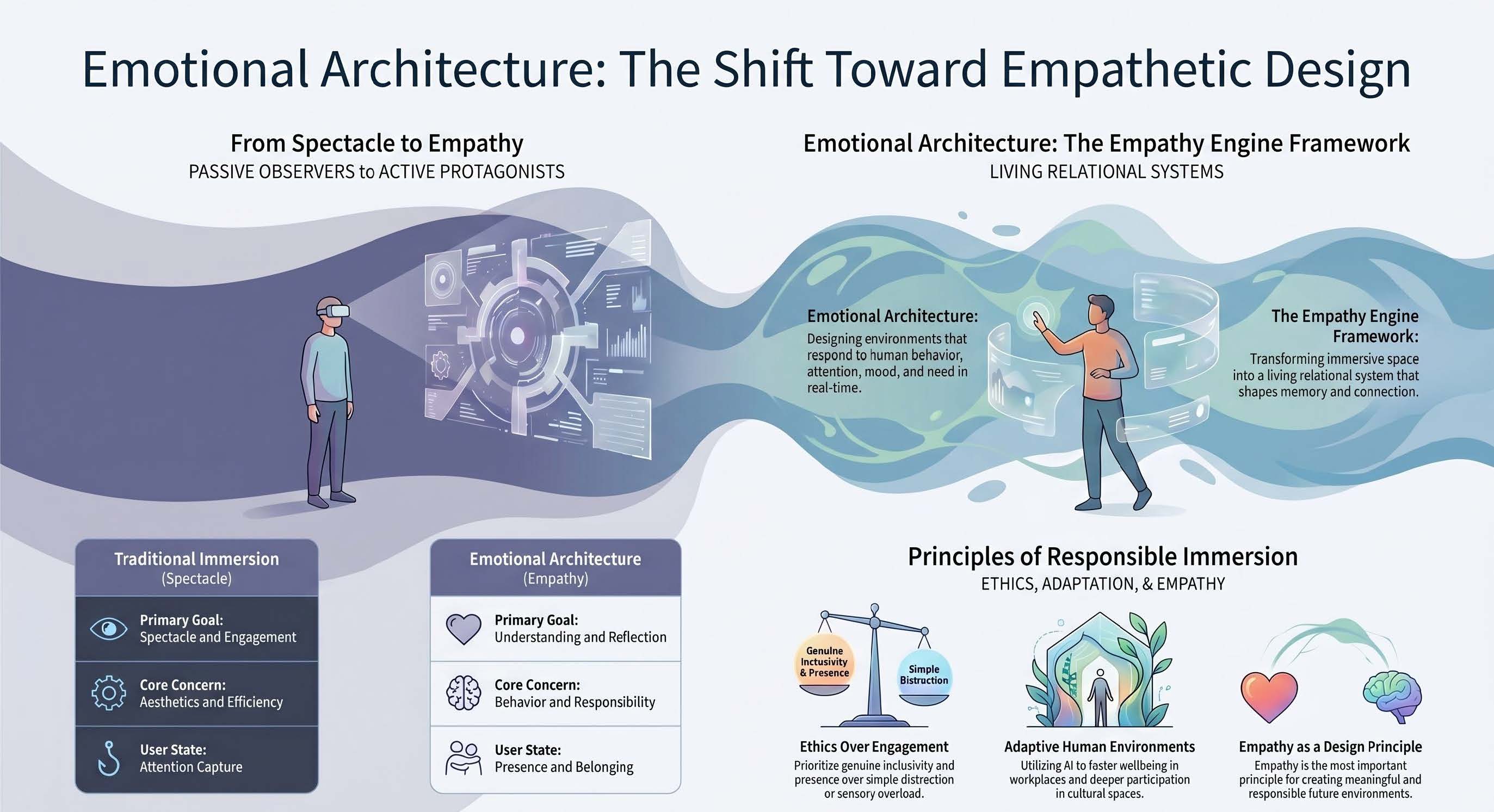
Image courtesy Adipat Virdi
Drawing on my Empathy Engine Framework methodology, I argue that the most powerful immersive experiences are not those that overwhelm audiences with technology but those that reposition people as active participants within meaningful systems of interaction.
Developed through years of work across immersive theatre, XR, AI-driven storytelling and spatial experience design, the framework explores how empathy can be operationalised within environments, thus, transforming audiences from passive observers into emotionally and ethically engaged protagonists.
This approach reframes immersive space not as a layer placed onto architecture but as a living relational system capable of shaping attention, behaviour, memory and social connection.
At a time when AI-generated environments, responsive interfaces and intelligent spaces are rapidly becoming commercially viable, the conversation asks whether the future of immersive design will simply optimise engagement or whether it can help cultivate understanding, reflection and belonging.
Ultimately, “Immersive Spaces: Technology, Empathy & the Human Experience” is not simply a conversation about technology but becomes a conversation about what kind of human experiences we want to build into the spaces of the future and what responsibilities come with designing environments that increasingly think, respond and feel alongside us.