Blog
Rivelin Robotics to finish 3D printed military parts

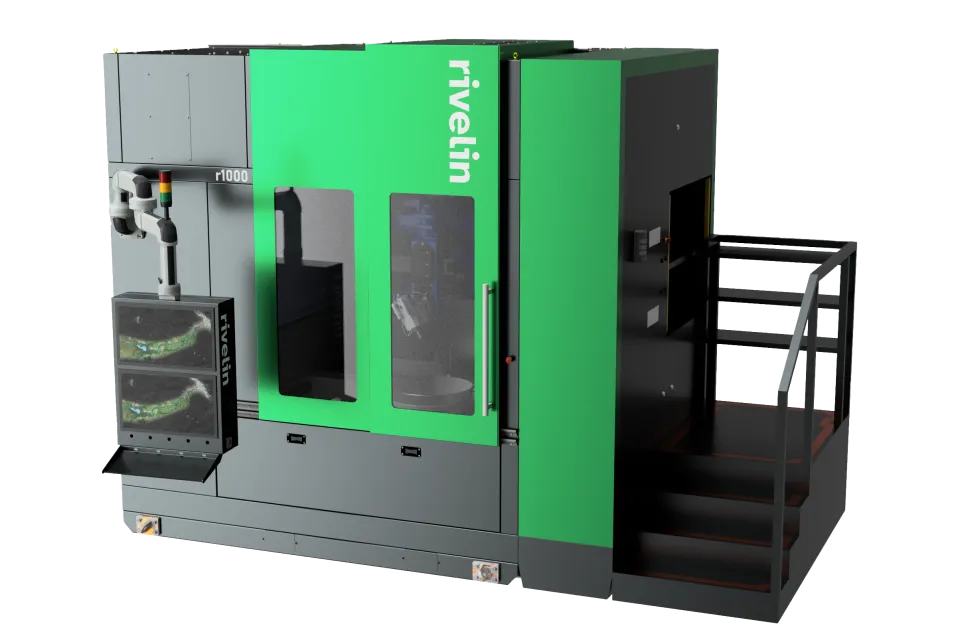
The company, supported by Dstl experts, has created microfactory technology to automate the slow, manual finishing of 3D printed parts.
This, highlights, Dstl, can be a critical vulnerability for additive manufactured components. Rivelin has solved this challenge, it says, with “proprietary control systems that give industrial robots human-like dexterity and perception”.
For example, using its NetShape control platform – involving software interfaces, sensors, and controllers – the company’s industrial robots finish parts faster and more accurately than is manually possible. They can also work 24/7, of course.
Rivelin Robotics
The organisation says developing the robotics capability will strengthen military operational resilience, while also supporting UK industry.
Dstl states:
“The system (made by Rivelin Robotics) handles complex geometries across metals, polymers, and ceramics, eliminating the economic penalties of traditional hand-finishing.”
“The defence implications are significant. For example, naval operations often face long delays waiting for spare parts or incur high costs for local machining. Rivelin’s microfactories enable on-demand manufacturing, reducing supply chain dependencies and saving taxpayer money.”
Funding accelerating
UK Defence and Security Accelerator funding has been used to turn Rivelin’s initial concept into reality.
The company has now sold micro factories to five customers. It has also expanded from aerospace, medical, automotive, and energy sectors into defence.
The headquarters of Rivelin Robotics are in Sheffield.
CBR threat
Last month we reported Dstl has also been assessing robotic systems in a hazardous incident recovery trial set indoors.
The focus was on chemical, biological or radiological (CBR) substances that can threaten public health, especially in confined spaces. For example, shopping centres.
In a ‘real life’ scenario played out in an empty shopping unit, the defence organisation tested the ability of robotic and autonomous systems to navigate through a building and detect, sample and remediate (clean) a contaminated environment.
Images: Rivelin Robotics
See all our Robotics content.