Blog
Rethinking Display Design for Modern Engineering Workflows

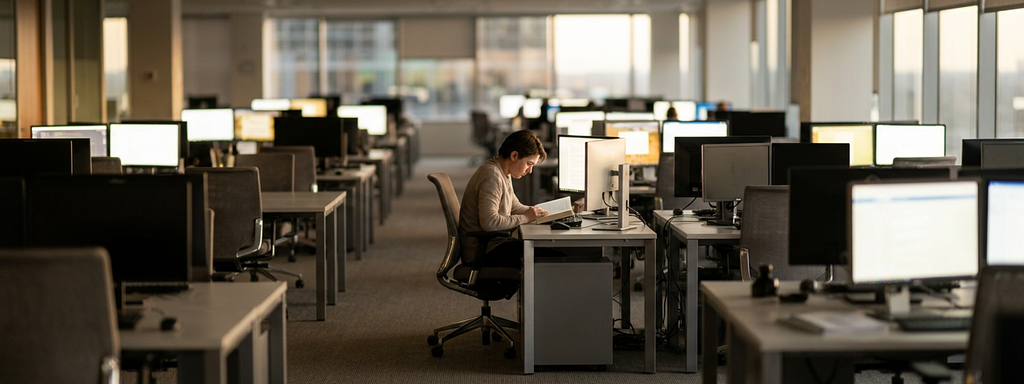
However, today, we understand the deeper impact of screen time on user well-being, especially during prolonged periods. Extended screen exposure continues to impact sleep cycles, focus, endurance, and long-term comfort, especially for professionals spending long hours in front of dense technical workloads.
Designing display technology with this widespread strain in mind will mark the next path forward for intuitive, personalized technology for professionals across industries. Monitors that meet the needs of modern engineering work will integrate features that reduce these risks and enhance user comfort.
For example, advances in AI in emerging circadian-aware displays integrate dynamic color temperature adjustments, ambient light sensing, and real-time monitoring based on posture, eye strain, and other environmental factors. In these cases, monitors aren’t designed for industry benchmarks, but for the end user in mind.
Further, monitors aligning visual output with time of day and personalized user conditions become a source of working smarter while mitigating the risk of burnout and physical strain. In turn, these designs are better poised to enable more productive work periods and positive collaboration while also representing the next wave of technology innovation.
Displays designed with cognitive endurance in mind provide more than just high resolutions. These devices are a long-term investment, allowing engineers to maintain visual accuracy and reduce strain to stay precise and efficient during complex projects.
Extending Productivity Beyond the Desk
As increasingly innovative features are built into traditional monitor ecosystems, engineers also need the option to work with mobility given the nature of modern work environments taking them from office to on-site environments.
In 2026, work is increasingly fluid as engineers and technical professionals move between offices, labs, client sites, and home offices.
Productivity can no longer depend on a static work environment. Portable displays shift toward mobility-first productivity, leveraging lightweight designs and expanding screen space to instantly extend professionals’ visual workspace wherever work happens.
In my own experience, having a monitor I’m able to travel with provides the support I need to manage multiple tasks without interruption. For instance, when leading a remote meeting on my laptop, I’m able to easily navigate important files on my portable screen.
For engineers in field environments, a lightweight, single-cable portable display can extend a laptop into a dual-screen workplace to view design abstracts on one screen while referencing testing dashboards on another. Whether on a factory floor or at a construction site, this might mean that engineers can monitor system performance on the ground or make real-time changes to design plans with more screen estate while on-the-go.
As work environments continue to evolve, engineers need technology that allows them to adapt. Enabling dual-screen productivity across hybrid and onsite environments will help engineers maintain continuity, reduce cognitive disruption, and sustain momentum across projects. The continuity enabled by portable monitors makes it so that engineers can manage the same multi-screen workflow from any environment they’re in and meet the demands of modern work.
Display Technology: Not a Passive Panel Anymore
In 2026, display technology is no longer a passive panel defined by specifications alone. It’s becoming a perceptive interface that senses, adapts, and responds to how engineers work. From cognition-aware technologies that help sustain focus, to features designed to reduce cognitive overload, to portable displays that enable structured productivity across environments, the role of display technology is expanding in meaningful ways.
Whether on the factory floor, collaborating across teams, or working in the field, modern visual technologies empower engineers to operate confidently across environments, manage multiple workflows, and reduce long-term strain. This is the moment for teams to embrace visual technologies as intelligent solutions to meet the evolving demands of engineering.