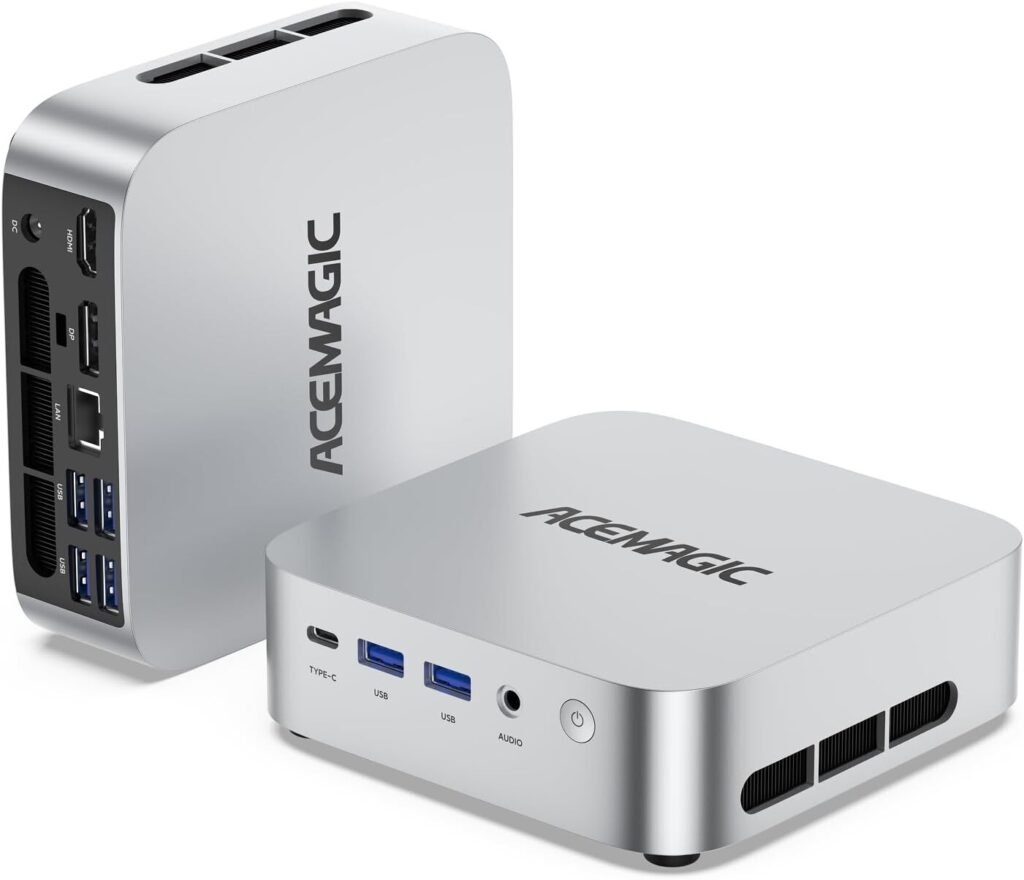
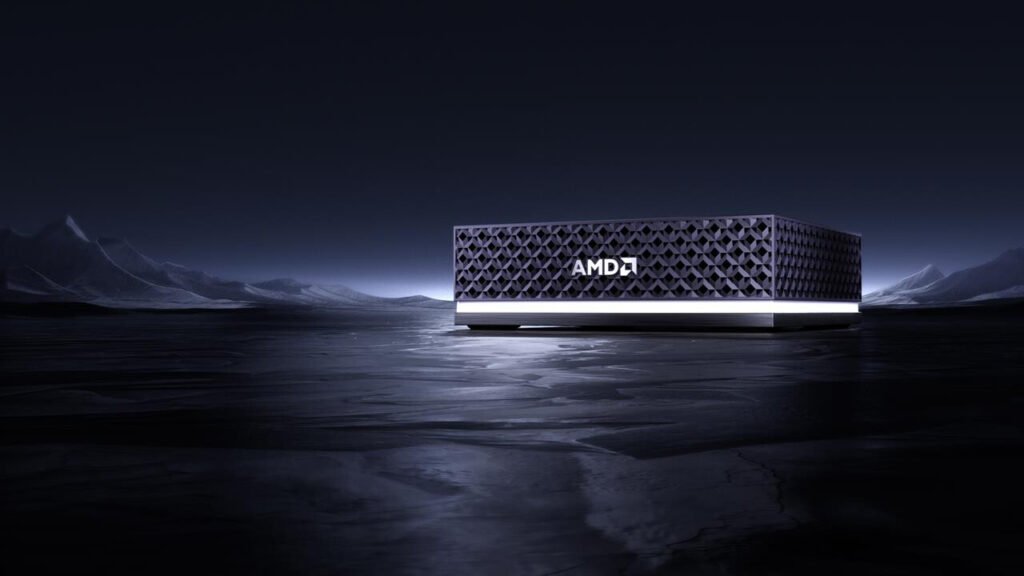
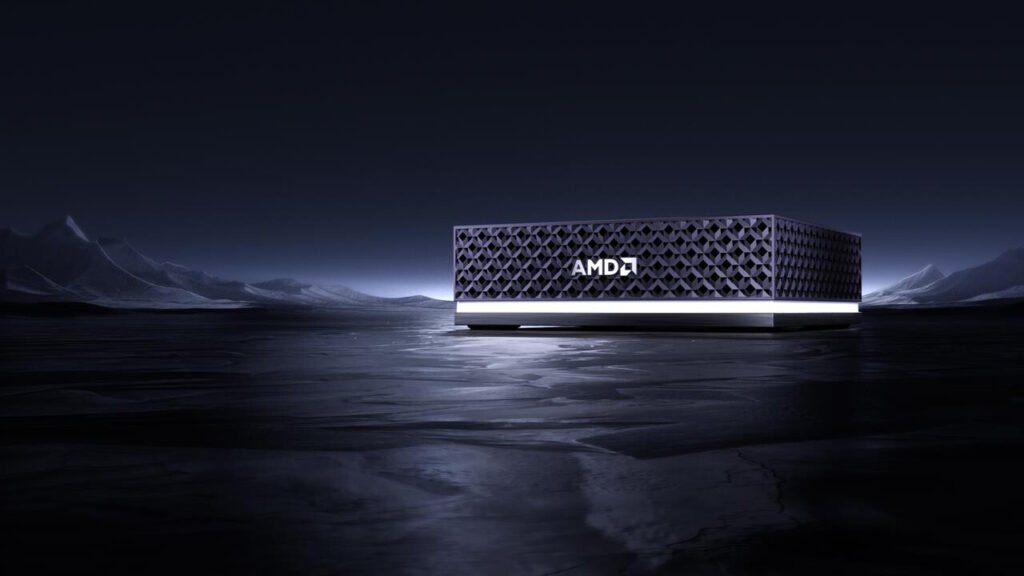
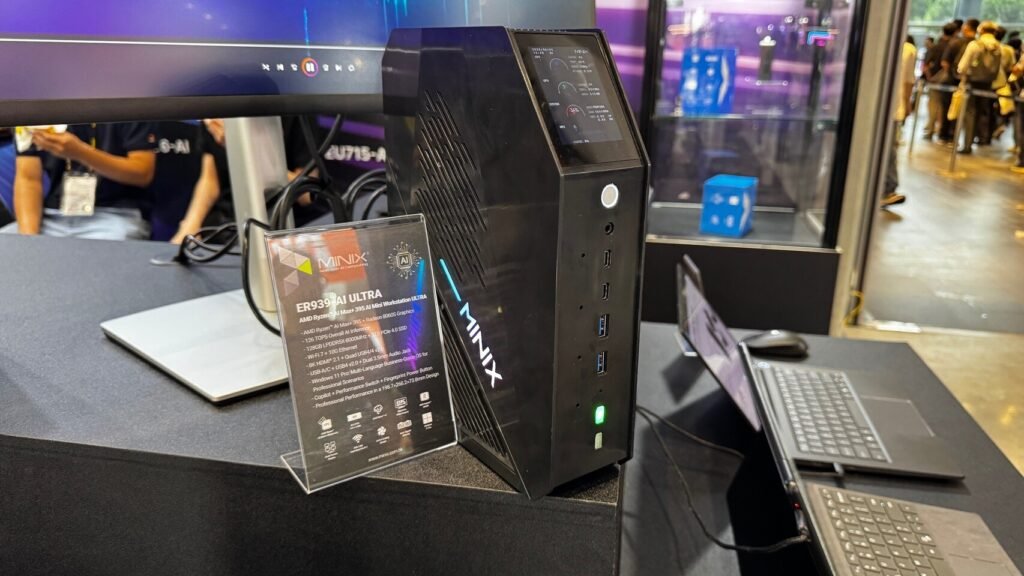
GPD has officially announced its Box mini PC and its G-series eGPUs, which both now feature faster external PCIe interfaces for gaming and AI use cases. The GPD Box itself is a fairly standard Panther Lake mini PC, although not too much has been revealed about the Box aside from its new eGPU interface. The GPD Box swaps out the traditional USB4 or Thunderbolt 5 port with an MCIO 8i (Mini Cool Edge IO) port, which is capable of full PCIe 5.0 ×8 bandwidth. MCIO 8i aside, the Box looks to have a healthy assortment of ports, with dual USB Type-A and Type-C ports, alongside a 3.5 mm audio jack on the front and two USB Type-A ports, DP and HDMI for display, and dual Ethernet ports on the back of the mini PC. That MCIO ×8 port is theoretically capable of bidirectional bandwidth of up to 512 Gbps, although there are legitimate concerns about rated insertion cycles and wear on the ports, given that MCIO was initially designed for server applications, where hardware would be plugged and unplugged far less frequently than in consumer applications. It should also be noted that it is limited to PCIe ×8, even on PCIe Gen 5, meaning it will be limited to 256 Gbps bidirectional bandwidth on PCIe Gen 5.
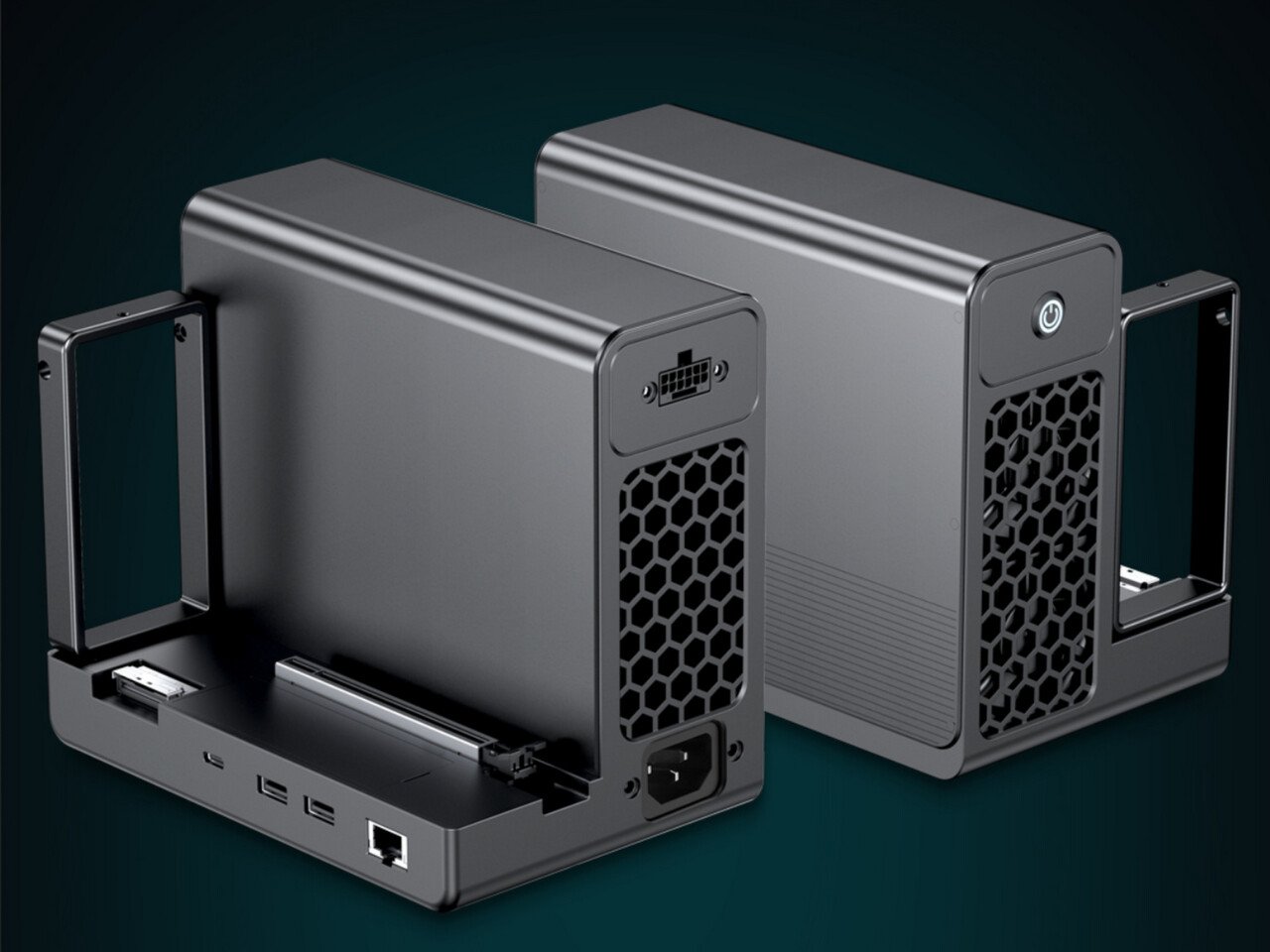
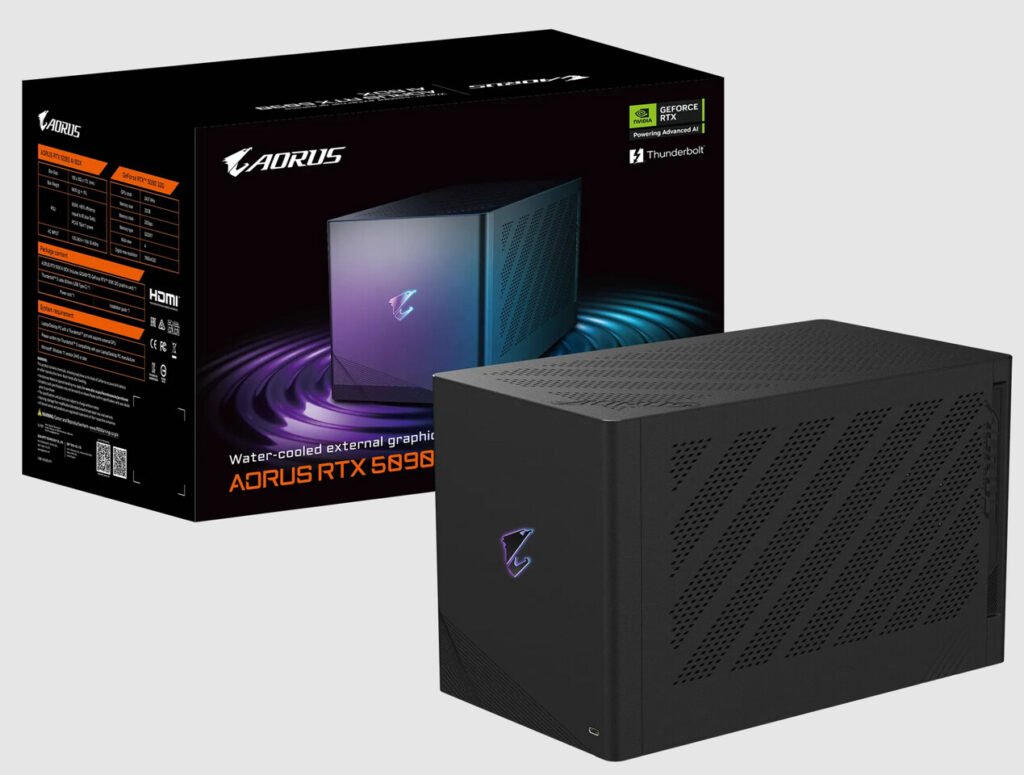
The GPD G2 itself is the eGPU enclosure launching alongside the Box mini PC, and it is capable of connecting either over USB4 v2.0 or MCIO 8i, making it useful for more than just the GPD mini PC. GPD claims that the G2 can run an NVIDIA RTX 4090 with only 2% performance loss, which is a level of throughput that neither Thunderbolt 5 nor OCuLink can achieve. The G2 eGPU dock itself has dual USB Type-A ports for peripherals and a USB4 port with 100 W PD charging, and there’s a built-in PCIe SSD expansion slot in the eGPU dock for extra storage. The G2 also has its own on-board PSU that connects to the GPU with an externally routed 12v-2×6 cable—GPD has not yet revealed the output of that unit, but presumably, it will at least be enough to power an RTX 4090 if that’s what the company is staking its performance claim on. Availability and pricing have not yet been announced, but the Weibo announcement post lists 2026 as the release date, so we will likely find out more, including more specifications, later this year.