Blog
Intel Texture Set Neural Compression Shrinks Textures by Up to 18x with Minimal Quality Loss

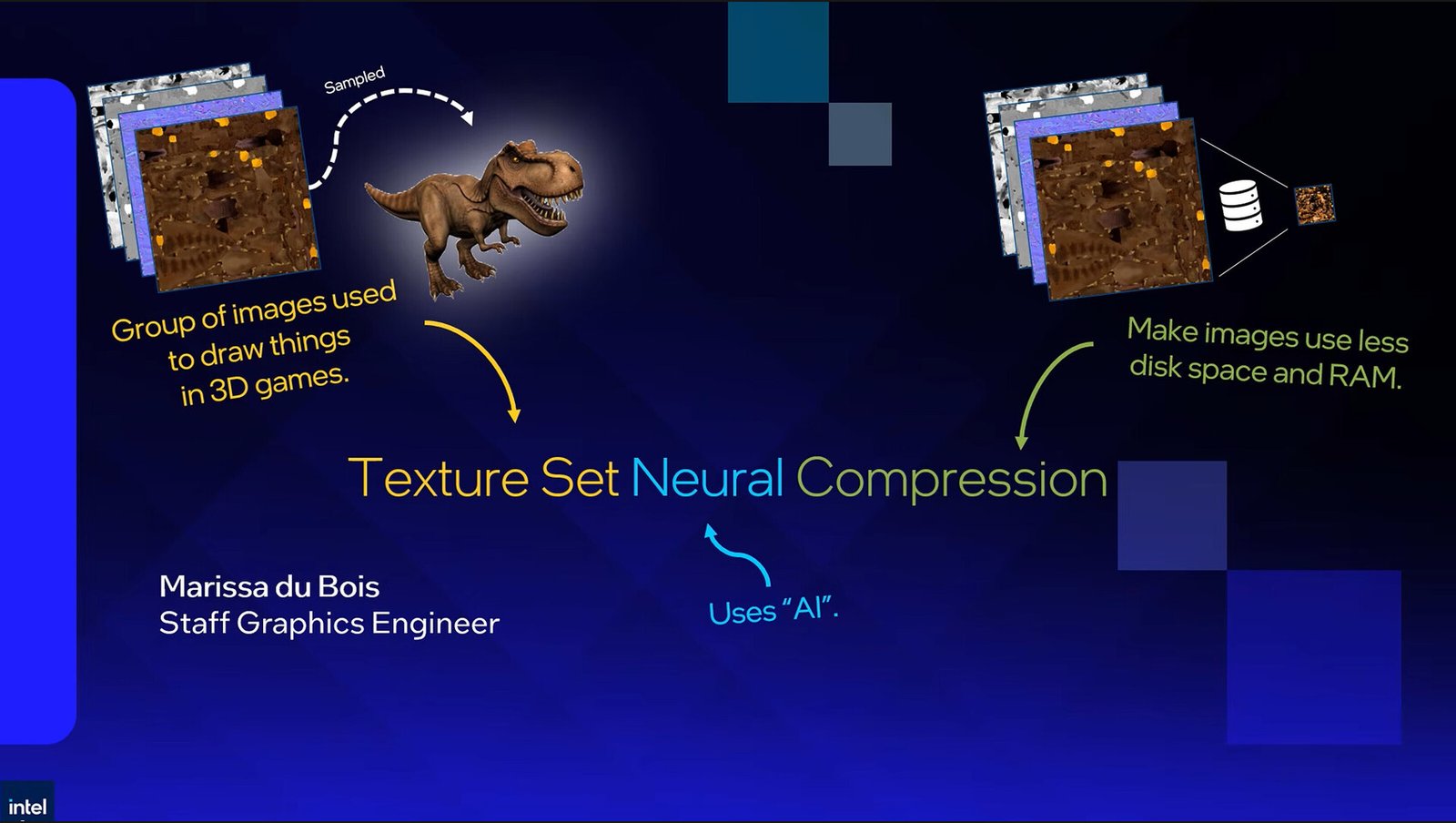
There are several ways to apply TSNC neural compression, depending on the desired outcome, whether it’s saving game installation size, reducing VRAM usage, or improving performance. Variant A, as Intel calls it, can achieve up to 9 times compression of the standard texture set, with little to no difference in visual quality—almost an unnoticeable drop. However, when the goal is maximum efficiency and requires up to 18 times texture compression, Intel offers Variant B of the TSNC neural network. This variant provides a significant performance boost, with the trade-off being a modest visual change. Using NVIDIA’s FLIP tool to measure quality drop in generated images, Intel notes that Variant A experiences a 5% visual quality drop, while Variant B sees up to a 7% quality drop, which is noticeably more.
You can judge for yourself by viewing the comparison images below.Finally, Intel benchmarked the performance of its Texture Set Neural Compression technology using the latest “Panther Lake” system with Arc B390 integrated graphics, which also includes XMX cores to accelerate these technologies seamlessly. The AI model is producing the first texture pixel in about 0.194 nanoseconds, which is fast enough for users not to notice any additional latency or experience oddities in their game rendering. We can expect this technology to be shipped later this year as an alpha version, with beta and full stable releases expected later on, though no concrete timelines have been provided.